
The last tour group shuffles down Hill Avenue as moonlight spills across the weathered brick walkway. Long shadows stretch from the Georgian columns of Blount Mansion, reaching like dark fingers toward the departing visitors. The guide locks the iron gate with a hollow clang that echoes into the autumn night. Then silence settles over the property, thick and expectant.
Standing proud against the Knoxville skyline, Blount Mansion ranks among Tennessee’s oldest and most historically significant structures. Within these walls, a territory became a state. Founding fathers debated, conspired, and dreamed of a future none of them would live to see completed. The mansion has witnessed more than two centuries of American history unfold.
But when the sun drops below the Smoky Mountain horizon and the tourists retreat to their hotels, a different kind of history stirs. By day, visitors walk hallways that birthed Tennessee statehood. By night, those same corridors belong to something else entirely. Something that remembers.
The docents speak in careful, measured tones about what happens after hours. The footsteps that echo when no feet touch the floor. The figures glimpsed in windows long after closing. Some of the mansion’s former residents, it seems, have never truly departed their beloved home.
Ready For More Ghost Hunts?
Check Out Our Ghost Tours of KnoxvilleHistorical Background
The Governor’s Vision
William Blount arrived on the Tennessee frontier with ambition burning in his chest and a commission from President George Washington in his pocket. As Governor of the Southwest Territory, he needed a residence befitting his station. In 1792, he constructed what would become Blount Mansion, a testament to his vision for the untamed lands beyond the Appalachian Mountains.
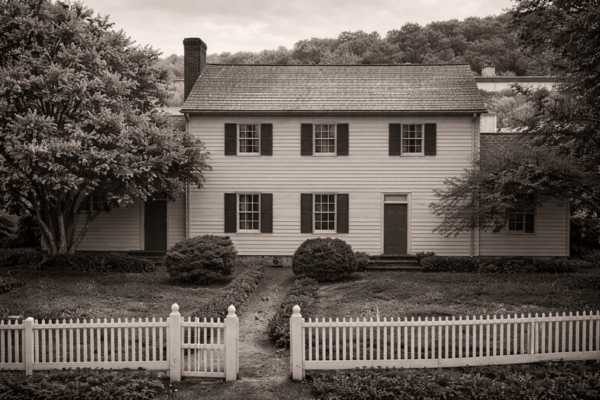
The structure rose as one of the first frame houses west of those ancient peaks. While settlers huddled in rough log cabins, Blount built something grander. Something permanent. The mansion served not merely as a home but as the territorial capitol itself, the very nerve center where Tennessee’s path to statehood was forged through endless negotiations and political maneuvering.
Within these rooms, the documents that would birth a new state were drafted, debated, and signed. The air itself seemed to crackle with possibility and power. Blount had created more than a dwelling. He had constructed the cradle of a commonwealth.
A House Shaped by Ambition and Tragedy
William Blount’s star burned bright before it plummeted into shadow. His political career ended in spectacular disgrace when Congress expelled him from the Senate in 1797, the first senator in American history to face such humiliation. Accusations of conspiracy with Britain to seize Spanish Florida clung to his name like a shroud. Though he avoided conviction, the scandal marked him forever.
The emotional weight of that fall permeated the walls of his home. A family that once hosted dignitaries and dreamed of dynasty found themselves navigating the treacherous waters of frontier life, political exile, illness, and loss. Death visited these rooms with grim regularity, as it did all households of the era. Children succumbed to fevers. Elders wasted away in upstairs bedchambers. The mansion absorbed every tragedy like a sponge.
And there were others whose stories remain largely unwritten. Servants moved through these halls. Enslaved people labored within these walls, their lives constrained by the brutal realities of the time. They too lived here. They too suffered here. They too died here, their names often lost to history but their presence perhaps not entirely vanished.
Generations passed through Blount Mansion, each leaving invisible fingerprints on the atmosphere. Triumph and sorrow braided together into the very foundation of the place. A house with this much history, this much raw human experience compressed into its timbers, rarely sits quietly.
Reported Hauntings
The Governor Who Never Left
Staff members working late at Blount Mansion know the feeling intimately. That prickle at the back of the neck. The certainty that someone stands just beyond the edge of vision. Then they turn, and he is there.
Accounts describe a distinguished male figure in period clothing, his bearing unmistakably that of a man accustomed to authority. He appears most frequently near the office where William Blount once plotted the political future of an entire territory. Witnesses describe him pacing, his hands clasped behind his back, his expression intense and troubled.
Some say his eyes hold the haunted look of a man reviewing his failures. Others insist he seems unaware of the living observers, trapped in some eternal loop of contemplation. The apparition never speaks. He simply paces, and watches, and vanishes when approached directly.
Those who have seen him believe without question that Governor Blount has never truly relinquished his beloved mansion. Perhaps he cannot. Perhaps the weight of his ambitions chains him here still.
The Lady in White
She drifts past upper windows in flowing white garments, her movements ethereal and sorrowful. Visitors standing on Hill Avenue have spotted her silhouette against the glass, a pale figure gazing out at a world that has changed beyond recognition. By the time anyone enters the building to investigate, she has dissolved into nothing.
The identity of this spectral woman remains a matter of speculation. Some believe she is Mary Grainger Blount, the Governor’s wife, forever watching for a husband whose political disgrace broke her heart. Others suggest she may be one of the many women who called this mansion home across the centuries, trapped by grief or love or unfinished purpose.
Her appearances carry an unmistakable melancholy. Those who catch glimpses of her describe an overwhelming sense of sadness that lingers long after the figure itself has faded. She seems to be waiting for something, or someone, that will never come.
Disembodied Voices and Phantom Footsteps
Not all manifestations at Blount Mansion take visible form. Sometimes the haunting announces itself through sound alone.
Staff members preparing for morning tours have frozen at the murmur of conversation drifting from empty rooms. The voices remain just below the threshold of comprehension, tantalizing fragments of discussions that ended two centuries ago. Attempts to locate the source yield nothing but silence and dust motes spinning in shafts of morning light.
More common still are the footsteps. The heavy thud of boots crossing wooden floors. The measured stride of someone walking with purpose through hallways where no living person stands. Security personnel have investigated these sounds countless times, weapons drawn, hearts pounding, only to find every room vacant and every door secure.
Cold spots materialize without warning, sudden plunges in temperature that raise gooseflesh and quicken breathing. They bloom in random locations, persist for seconds or minutes, then dissipate as mysteriously as they arrived. No drafts explain them. No open windows or faulty climate systems account for their appearance. They simply exist, brief intrusions from some colder place.
Haunted Hotspots Within the Location
The Upstairs Bedchambers
The second floor bedrooms carry the heaviest atmosphere in the mansion. These intimate spaces witnessed the most private moments of those who dwelt here. Births. Deaths. Sleepless nights of worry and grief. The walls seem saturated with residual emotion.
The Lady in White appears most frequently in these chambers. Visitors on guided tours report the unmistakable sensation of being watched from darkened corners. Some describe a pressure in their chests, a difficulty drawing full breath, as though the air itself has thickened with invisible presence. Cameras malfunction here more often than anywhere else in the building.
The Governor’s Office
The room where William Blount conducted the business of territorial governance maintains an almost oppressive heaviness. Visitors describe the atmosphere as dense, watchful, unwelcoming to the casual observer. Temperature fluctuations occur here with unsettling regularity, cold drafts sweeping through on windless days.
This space claims the most frequent sightings of the distinguished male apparition. Staff have entered to find papers disturbed, chairs shifted slightly from their positions. The sensation of an unseen presence presses against anyone who lingers too long, as though the room’s original occupant resents intrusion into his private domain.
The Staircase and Hallways
The phantom footsteps concentrate in transitional spaces. The main staircase echoes with the sound of ascending and descending feet at odd hours, long after the building has emptied. The wooden treads groan under invisible weight. The banister vibrates beneath unseen hands.
Shadow figures haunt the hallways. Visitors catch dark shapes from peripheral vision, human silhouettes that vanish when confronted directly. They move through doorways and around corners with apparent purpose, suggesting not random hauntings but the routines of people going about their daily lives, unaware that those lives ended generations ago.
The Grounds and Gardens
The haunting does not confine itself to the mansion’s interior. Evening visitors walking the property’s edge report flickering lights in windows that should be dark. Muffled voices carry across the gardens, conversations too distant to decipher but too clear to dismiss as imagination.
The landscape itself holds history. People lived and died across these grounds. Their presence saturated the soil long before the mansion was built and continued accumulating throughout its existence. Whatever walks inside the walls also walks beneath the stars.
Visiting the Site Today
Tours and Access
Blount Mansion operates as a historic house museum, welcoming the public to explore its storied rooms through guided tours. Knowledgeable docents lead visitors through the same spaces where Tennessee’s founding documents were drafted, sharing tales both historical and supernatural.
Special events occur throughout the year, with candlelit tours around Halloween offering particularly atmospheric experiences. These evening programs allow guests to explore the mansion as it would have appeared to its original inhabitants, by flickering flame rather than electric light. The shadows deepen. The creaking floorboards amplify. The boundary between past and present grows thin.
Tips for Respectful Visits
Those seeking encounters with the mansion’s otherworldly residents should approach with reverence. This building holds genuine historical significance, and the spirits reportedly dwelling within it were once real people with real lives. Treat them as you would wish to be treated.
Photography is encouraged throughout the property. Numerous visitors have captured unexplained anomalies on film, orbs and shadows and strange blurs that appear in no other photographs from the same roll. Bring a camera. Keep it ready. You never know what might develop.
Best Times for Atmosphere
Late afternoon visits, as shadows lengthen across the grounds and sunlight turns golden, offer evocative ambiance without the commitment of full darkness. Seasonal evening events provide more intense experiences for those seeking genuine chills.
The autumn months deliver the most powerful atmosphere. When leaves carpet the walkways in shades of amber and rust, when early darkness descends and mist rises from the Tennessee River, Blount Mansion reveals its true character. This is when the veil grows thin. This is when the mansion remembers.
Closing Scene
Night has fully claimed Hill Avenue now. A veil of Tennessee fog drifts across the grounds of Blount Mansion, softening the edges of the Georgian architecture into something dreamlike and uncertain. The streetlamps cast weak circles of orange light that fail to penetrate the deeper shadows pooling beneath the ancient trees.
Then a flicker. An upstairs window, the one overlooking the garden, the one in the bedchamber where visitors report feeling watched. A pale glow pulses behind the glass, candlelight where no candle burns, illumination where no source exists. It wavers. It steadies. A silhouette passes across it, there and gone in the space of a heartbeat.
In Knoxville’s oldest home, history does not rest. It watches from windows that should be dark. It waits in rooms that should be empty. And sometimes, when the fog rolls in and the living world retreats, it walks the halls once more, forever pacing, forever remembering, forever bound to the house that William Blount built on the edge of the frontier.
The light in the window flickers once more, then extinguishes. The mansion settles into silence. But silence, here, is never truly empty.