
The tower rises 315 feet into the Miami night sky, its Mediterranean Revival architecture illuminated by golden lights that make it glow like a beacon against the darkness. Palm trees sway gently in the tropical breeze surrounding the Biltmore hotel, their fronds rustling with whispered secrets. Inside the grand corridors, crystal chandeliers cast dancing shadows across marble floors. The swimming pool, one of the largest hotel pools in the continental United States, lies still and mirror-like under the stars.
But long after the last guest has retired to their room, after the bars have closed and the lobby has emptied, something stirs in the hotel. Footsteps echo through empty hallways. Elevator doors open on floors where no one pressed the button. Lights flicker in rooms that should be dark. And on certain nights, guests report the unmistakable feeling of being watched by eyes that belong to no living person.
The Biltmore hotel stands as one of South Florida’s most iconic luxury destinations, a National Historic Landmark that has hosted presidents, celebrities, and royalty since 1926. Its elegance is undeniable, its service impeccable, its history rich with glamour and prestige. But beneath the polished exterior and refined atmosphere lies a darker legacy of tragedy, violence, and unexplained phenomena that have earned the Biltmore hotel a reputation as one of the most haunted hotels in America.
Ready For More Ghost Hunts?
Check Out Our Ghost Tours of MiamiThe Birth of a Miami Icon
The Biltmore hotel opened its doors on January 15, 1926, during the height of Miami’s great land boom. Developer George Merrick envisioned the hotel as the crown jewel of his planned community of Coral Gables, a Mediterranean-inspired oasis that would attract the wealthy elite to South Florida’s shores.
No expense was spared in the construction. The hotel cost $10 million to build, an astronomical sum in the 1920s. Italian artisans were brought over to hand-paint the vaulted ceilings. The finest materials were imported from Europe. The design drew inspiration from the Giralda tower in Seville, Spain, creating a structure that was both uniquely Floridian and elegantly European.
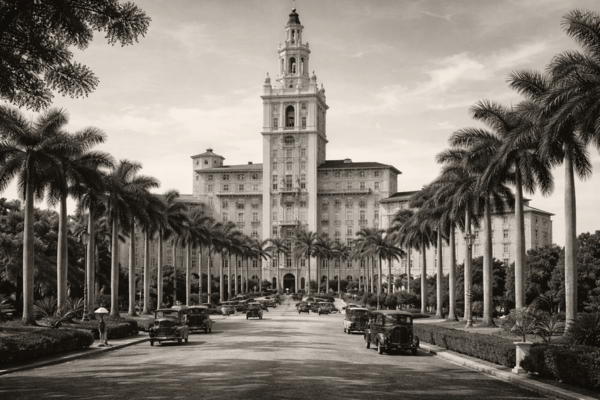
From its opening night, the Biltmore hotel became the social epicenter of Miami’s high society. The hotel hosted elaborate galas, championship golf tournaments, and aquatic shows in its massive swimming pool featuring Olympic swimmers and synchronized diving performances. Celebrities flocked to the property: the Duke and Duchess of Windsor, Judy Garland, Bing Crosby, and Al Capone all walked its marble halls.
The hotel’s 400 guest rooms offered the height of luxury. Guests enjoyed private baths, the latest in climate control, and views of either the golf course, the city, or the carefully manicured grounds. The restaurants served continental cuisine prepared by European-trained chefs. The bars mixed the finest cocktails, even during Prohibition when creative loopholes kept the alcohol flowing.
This era of glamour established the Biltmore hotel as more than just a place to stay. It became a destination, a symbol of sophistication and success. But this golden age would be interrupted by war, transformed by tragedy, and ultimately complicated by the spirits that some say never checked out.
A Hotel Touched by Tragedy
The Mob Era and Rumored Shootout
The late 1920s and 1930s brought more than just celebrities to the Biltmore hotel. The hotel’s reputation for luxury and discretion also attracted figures from Miami’s criminal underworld. Among the most notorious alleged guests was mobster Thomas “Fatty” Walsh, a member of organized crime circles who frequented the hotel during the Prohibition era.
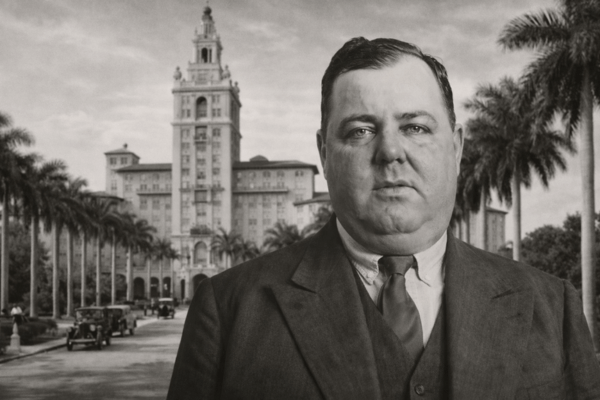
The most persistent legend surrounding the Biltmore hotel involves Walsh’s violent death. According to the story passed down through decades, Walsh was shot to death on the hotel’s 13th floor in 1929. Some versions claim it was a mob hit, a targeted assassination carried out in the supposedly safe confines of one of Miami’s most prestigious establishments. Others suggest a gambling dispute that turned deadly, or a love triangle that ended in gunfire.
The details vary depending on who tells the story. Some accounts place the shooting in a specific suite, others in a hallway or stairwell. Certain versions name the killers, while others leave the murderer’s identity mysterious. What remains consistent is the claim that Walsh died violently within the hotel and that his spirit never left.
Adding to the mystery is the difficulty in verifying the event. Hotel records from that era are incomplete. Newspaper archives contain gaps. The hotel management of the time would have had strong incentive to keep such an incident quiet, as a high-profile murder would have damaged the property’s exclusive reputation.
Whether the murder occurred exactly as legend claims or evolved from smaller truths into the dramatic tale told today, the story has become inseparable from the Biltmore hotel’s identity. And the paranormal activity reported on the upper floors, particularly around what would have been the 13th floor area, gives the legend a persistent vitality that refuses to fade.
The Wartime Hospital Years
The hotel’s most dramatic transformation came during World War II. In 1942, the U.S. government requisitioned the property and converted the luxury hotel into a military hospital. For the duration of the war and several years after, the elegant ballrooms became wards, the guest suites turned into recovery rooms, and the swimming pool was drained and covered.
The Biltmore Army Hospital, as it was known during this period, treated thousands of wounded soldiers returning from combat. Young men arrived with devastating injuries: amputated limbs, severe burns, shrapnel wounds, and psychological trauma that would later be recognized as PTSD. The marble floors that once echoed with the footsteps of dancers now supported gurneys carrying the wounded and dying.
Not all the soldiers who entered the hotel as a hospital left alive. Some succumbed to their injuries despite the medical staff’s best efforts. Others developed infections or complications during their recovery. The exact number of deaths that occurred within the building during its hospital years remains unclear, but photographs and military records confirm that the hotel witnessed significant suffering during this period.
The emotional weight of those years left an indelible mark on the hotel. Staff members who work in the building today sometimes report feelings of profound sadness in certain areas, particularly in sections that served as intensive care or operating rooms. Some paranormal researchers believe that the psychic imprint of so much pain and death layered new hauntings onto whatever spirits already occupied the building.
The hotel returned to civilian use in 1968, undergoing extensive renovations to restore its former grandeur. But restoration could not erase the memories absorbed during the war years, when the Biltmore hotel served not as a symbol of luxury but as a place where young men fought their final battles against wounds that proved too severe.
Deaths That Left a Mark
Beyond the famous Walsh murder legend and the wartime hospital deaths, the hotel has witnessed other tragedies throughout its nearly century-long history. Like any large, old building that has housed thousands of people over decades, the hotel has seen its share of fatal accidents, natural deaths, and unexplained incidents.
Guest deaths from natural causes, while not paranormally significant on their own, accumulated over the years. Heart attacks, strokes, and other medical emergencies claimed lives within the hotel’s rooms and public spaces. Some deaths occurred in the swimming pool, despite the presence of lifeguards and safety measures.
There are whispered stories among longtime staff about suicides, though these are difficult to verify through official records. One persistent tale involves a woman who threw herself from one of the upper floor windows during the hotel’s early years, though the details remain frustratingly vague and possibly apocryphal.
The hotel’s tower has been the subject of particular speculation. At 315 feet, it offers commanding views of Miami but also represents a dangerous height. Whether any deaths have occurred specifically in the tower area remains unclear, but the space carries an energy that many visitors describe as unsettling.
Construction accidents during the hotel’s building phase may have also contributed to its haunted reputation. Building projects in the 1920s operated under less stringent safety regulations than today, and large construction sites occasionally witnessed fatal injuries. While no specific accidents at the hotel have been definitively documented, the possibility adds another layer to the building’s dark history.
Each death, whether dramatic or quiet, violent or natural, added to the emotional residue that paranormal researchers believe can accumulate in a location. The hotel represents nearly a century of human experience, including the inevitable tragedies that come with housing, healing, and hosting thousands of people across generations.
The Hauntings of the Biltmore Hotel Miami Florida
The Ghost of Thomas “Fatty” Walsh
The most famous spirit said to haunt the Biltmore hotel is that of Thomas “Fatty” Walsh, the mobster allegedly murdered on the property in 1929. Walsh’s presence has been reported for decades, making him the hotel’s signature ghost and the focus of most paranormal investigations conducted on the property.
Walsh’s activity centers around the 13th floor, though modern numbering may have changed how this floor is labeled. Guests staying on the upper floors report distinctive phenomena:
Door disturbances: Room doors opening on their own, particularly in the middle of the night. Guests report securing their doors with deadbolts and chains, only to wake and find them standing wide open with no evidence of forced entry. Some describe hearing the distinctive sound of a key turning in a lock when no one is outside their room.
Electrical anomalies: Lights flickering in specific patterns, as if someone is playing with the switch. Television sets turning on spontaneously, often to static channels or switching rapidly between stations. Alarm clocks resetting to odd times or going off when no alarm was set.
Physical manifestations: The most unnerving reports involve guests waking to see a heavyset man in 1920s-era clothing standing at the foot of their bed or in the corner of the room. The figure appears solid and three-dimensional, not transparent or ghostly. When witnesses react with fear or surprise, he simply vanishes, fading away as if he were never there.
Atmospheric changes: Rooms on the upper floors sometimes experience sudden, dramatic temperature drops. Guests describe the air becoming heavy and oppressive, as if someone has entered the space and is watching them. The feeling often localizes near doorways or in corners, suggesting an invisible presence occupying specific areas.
Staff members report particularly strong activity in hallways and stairwells near what would have been the 13th floor area. Security guards making late-night rounds describe hearing heavy footsteps behind them, only to turn and find empty corridors. Housekeepers working early morning shifts occasionally refuse to service certain rooms alone, claiming they feel watched or threatened by an unseen presence.
Walsh, if he indeed haunts the hotel, seems territorial. His appearances often carry an edge of aggression or warning, as if he’s checking on who has entered his domain. Some witnesses report feeling distinctly unwelcome, as though an invisible force is encouraging them to leave certain areas.
Phantom Footsteps and Moving Objects
Beyond the specific Walsh encounters, the hotel experiences broader paranormal phenomena that suggest multiple spirits occupy the property. These manifestations occur throughout the building, not confined to any single floor or section.
Phantom footsteps are among the most commonly reported phenomena. The sounds typically manifest in these ways:
- Heavy boots on marble floors, echoing through empty corridors late at night
- The distinctive click of women’s high heels crossing the lobby when no one is visible
- Running footsteps in hallways above guest rooms, particularly on floors verified to be vacant
- Footsteps that approach doors, pause as if someone is listening, then continue down the hall
The quality of these phantom sounds is what makes them particularly compelling. Witnesses don’t describe vague noises that might be explained away. They report clear, distinct footfalls with the acoustic properties of real human movement: the right rhythm, the appropriate echo, the correct volume as they approach and recede.
Object manipulation occurs with unsettling frequency:
Furniture in guest rooms shifts position overnight. Chairs that were placed at desks are found moved to face the bed. Luggage is relocated from one spot to another. Closet doors open despite being firmly closed before sleep.
In the hotel’s public areas, staff report more dramatic incidents. Tables in the restaurants are found rearranged after closing, despite the building being secured. Books in the library-style lounges are pulled from shelves and left open to specific pages. Paintings tilt on walls despite being properly secured.
Electronic equipment behaves erratically throughout the hotel. Radios turn on in guest rooms, often tuning to stations playing big band music from the 1920s and 1930s. Elevators develop quirks: calling themselves to floors where no one pressed a button, doors opening and closing repeatedly on empty floors, or taking passengers to the wrong floor despite the correct button being pressed.
Some guests report their room safes opening on their own, contents undisturbed but the door standing ajar when they return to their rooms. Air conditioning units cycle on and off in patterns that don’t match their programming. Telephone lights flash indicating messages when the front desk confirms no calls have come through.
The Feeling of Being Watched
Perhaps the most pervasive and unnerving phenomenon at the hotel isn’t something seen or heard but rather felt. Guests and staff throughout the property’s history have reported an overwhelming sensation of being observed by invisible eyes.
This feeling manifests most intensely in specific areas:
Certain hallways on the upper floors: Guests describe walking toward their rooms and suddenly feeling intense self-consciousness, as if someone is scrutinizing them from behind. Many report the urge to look over their shoulder repeatedly, despite knowing logically that no one is there. The sensation often includes the distinct impression that whoever is watching disapproves of their presence or is judging them in some way.
Stairwells and service corridors: Staff members working in back-of-house areas report the strongest sense of presence. Maintenance workers and housekeepers describe feeling someone standing just behind them, close enough that they can sense body heat and breath, despite being completely alone. Some refuse to work in certain areas without a partner.
The tower: Visitors who tour the iconic tower often report sudden anxiety or dread while climbing the stairs. The feeling intensifies at specific landings, particularly near the top. Many describe an urge to leave quickly, a primitive fear response that seems disproportionate to the actual environment.
Late-night public spaces: The lobby, ballrooms, and restaurants take on a different energy after midnight. Security guards report that while the spaces appear empty, they feel occupied. The sensation resembles walking into a room full of people who have suddenly gone silent and turned to stare at you, except no one is visible.
The psychological impact of this phenomenon shouldn’t be underestimated. Witnesses don’t describe vague unease. They report specific, directional awareness of being watched from particular spots. Some can point to the exact corner or doorway from which they feel eyes observing them. This precision suggests something more than general anxiety or imagination.
Physical responses accompany the psychological ones. People report:
- Sudden chills that don’t correspond to temperature changes
- Hair standing up on arms and neck
- Increased heart rate and shallow breathing
- An instinctive fight-or-flight response
- Nausea or dizziness that passes once they leave the area
What makes this phenomenon particularly compelling at the hotel is its consistency. The same locations trigger the same responses in different people who have no knowledge of others’ experiences. New employees often identify “uncomfortable” areas that match longtime staff members’ reports, despite never having been warned or told stories.
Paranormal Investigations and Firsthand Accounts
The Biltmore hotel has attracted paranormal investigators and ghost hunters for decades, drawn by its reputation and the consistency of reported phenomena. While the hotel maintains its image as a luxury destination and doesn’t actively promote ghost tours, it has cooperated with legitimate investigators and researchers interested in documenting the activity.
Professional investigations have yielded compelling evidence:
Electronic Voice Phenomena (EVP): Audio recordings conducted throughout the hotel have captured voices that weren’t audible to investigators during the recording sessions. Some of the most notable EVPs include:
- A man’s voice saying “Get out” in what appears to be a 1920s-era accent
- The sound of a woman crying, recorded in a hallway confirmed to be empty
- What sounds like party music and laughter playing faintly in the background of recordings made in silent rooms
- A voice saying “Walsh” in response to investigators asking for the ghost’s identity
Photographic anomalies: Hundreds of photographs taken at the hotel over the years show unexplained elements:
- Orbs of light moving in patterns that suggest intelligent control rather than dust or insects
- Shadow figures appearing in windows of rooms known to be vacant
- Mist formations in human shapes, particularly on staircases and in hallways
- Light anomalies around the 13th floor area that create the appearance of figures standing in corridors
Temperature fluctuations: Thermal imaging cameras have recorded dramatic cold spots throughout the property. These aren’t gradual temperature changes but sudden drops of 15-20 degrees in localized areas measuring just a few feet across. The cold spots often move, following investigators or appearing to retreat when approached.
Electromagnetic field (EMF) spikes: Detectors register unusual electromagnetic activity in areas with no electrical sources to explain the readings. The patterns suggest an intelligent source manipulating the electromagnetic environment rather than natural fluctuations.
Staff testimonies provide some of the most compelling evidence, as these witnesses have no incentive to fabricate stories that might frighten guests:
Longtime housekeepers report making beds in vacant rooms only to return minutes later and find clear impressions of bodies lying in them, as if someone had rested on the freshly made linens.
Security guards share stories of elevator cameras showing empty cars stopping at floors, doors opening, and then continuing as if invisible passengers had disembarked.
Restaurant workers describe place settings being rearranged overnight despite the dining rooms being locked and alarmed after closing.
Maintenance staff report tools disappearing and reappearing in different locations, electronic equipment malfunctioning in specific rooms but working perfectly once removed from those spaces, and the persistent feeling of being followed while working alone in the building’s mechanical areas.
Guest accounts accumulate steadily. Review sites and paranormal databases contain hundreds of firsthand reports from visitors who experienced unexplained phenomena during their stays:
- A couple who photographed an empty hallway only to discover a figure in 1920s clothing visible in the image when they reviewed it later
- A businessman who reported waking repeatedly throughout the night to see a heavyset man standing by his window, watching the view
- A family whose young child insisted someone was sitting in the room’s empty chair and asked repeatedly who the “sad man” was
- A wedding party staying on an upper floor where multiple guests reported doors opening, lights flickering, and the sound of footsteps all night
The consistency across these accounts is striking. Witnesses who have never met, stayed at the hotel years apart, and had no knowledge of its haunted reputation report remarkably similar experiences in the same locations.
The Biltmore Hotel Today
Luxury by Day, Unease by Night
The Biltmore hotel operates today as a Five-Star hotel and National Historic Landmark, offering 273 guest rooms and suites that blend historic elegance with modern luxury. During daylight hours, the property radiates sophistication and calm. Guests enjoy championship golf on the hotel’s course, relax by the stunning 23,000-square-foot pool, and dine in award-winning restaurants serving contemporary cuisine.
The daytime experience at the hotel reveals no hint of its haunted reputation. Sunlight streams through tall windows, illuminating meticulously restored architectural details. The lobby bustles with activity: guests checking in, concierges arranging excursions, business travelers working in elegant seating areas. The atmosphere is refined, professional, and decidedly un-spooky.
Staff members are courteous and efficient, maintaining the high standards expected of a luxury property. They rarely mention the paranormal stories unless directly asked, preferring to focus on the hotel’s architectural significance, celebrity history, and premium amenities. The Biltmore hotel markets itself as a destination for weddings, corporate events, and romantic getaways, not as a haunted attraction.
But as evening approaches, subtle changes occur. The crowds thin. The sunlight fades. The grand spaces grow quieter. Shadows lengthen across the marble floors. And guests who are sensitive to such things begin to notice the shift in atmosphere.
By midnight, hotel transforms. The elegant corridors feel less welcoming. The beautiful architecture casts unsettling shadows. The silence in the hallways feels heavy and expectant rather than peaceful. This is when the hotel’s other guests make their presence known.
The contrast between day and night at the hotel creates a peculiar duality. The same room that seems perfectly normal during a morning shower might feel distinctly occupied by an unseen presence at 3 AM. The hallway that appeared merely elegant during the evening stroll to dinner can feel threatening when returning from a late event.
Many guests never experience anything unusual. They enjoy their stay completely unaware of the property’s haunted reputation, see nothing strange, and depart with only positive memories of luxury and service. But others find their nights disrupted by phenomena they cannot explain, experiences that turn their peaceful getaway into something memorably unsettling.
Rooms and Areas with the Most Activity
While paranormal phenomena have been reported throughout the hotel, certain locations have earned reputations for heightened activity. Experienced paranormal investigators and longtime staff members can identify specific areas where encounters occur most frequently.
Upper floors, particularly around the 13th floor area:
The rooms and hallways on the upper levels consistently produce the most reports. While modern hotels often skip the number 13 in their floor numbering, the area that would correspond to the 13th floor experiences the highest concentration of Walsh-related sightings and disturbances. Guests staying in these rooms report:
- Doors opening repeatedly throughout the night
- The sensation of someone sitting on the edge of the bed
- Shadow figures seen in peripheral vision
- Electrical equipment behaving erratically
- The overwhelming feeling of being watched from specific corners
Request a room on a lower floor if you’re sensitive to paranormal activity or prefer uninterrupted sleep.
Historic stairwells:
The grand staircases and service stairs at the hotel carry particularly strong energy. The ornate main staircase near the lobby often appears in photographs with unexplained light anomalies or shadow figures. Service stairs used primarily by staff are sites of frequent footstep reports and the sensation of invisible people passing by on the steps.
Late-night visits to these stairwells often produce unsettling experiences: sudden cold spots on specific landings, the sound of footsteps above or below when the stairs are confirmed empty, and the feeling of someone standing just out of sight around the next turn.
The tower:
The iconic tower offers spectacular views but also hosts regular paranormal activity. Visitors taking tower tours sometimes report:
- Sudden vertigo or disorientation at certain levels
- The feeling of being pushed or pulled toward edges
- Voices echoing from above when only empty space exists overhead
- An oppressive atmosphere that makes breathing feel difficult
The tower is particularly active during storms, when the electromagnetic environment is already charged and unstable.
Pool area at night:
While the pool serves as a cheerful gathering spot during the day, its atmosphere changes dramatically after dark when the area closes to guests. Security personnel patrolling the pool deck at night report seeing figures diving into the water, only to find the pool surface undisturbed when they investigate. The sound of splashing and laughter sometimes drifts from the pool area well after midnight, despite the space being empty and secured.
Some paranormal researchers theorize this activity might connect to the hotel’s early years when the pool hosted elaborate aquatic shows, or possibly to drowning incidents over the decades.
Original ballrooms:
The grand ballrooms that hosted glamorous parties in the 1920s and served as hospital wards during World War II carry layered energy from both eras. When these spaces are empty late at night, staff report:
- The sound of music playing faintly, as if from a distant radio
- Footsteps moving across the floor in dancing patterns
- The scent of period perfumes and cigarette smoke appearing suddenly
- Cold spots that move through the room as if invisible couples are waltzing
Timing matters:
Activity at the Biltmore hotel intensifies during certain conditions:
- Late night and early morning hours (midnight to 4 AM)
- Rainy or stormy weather
- Anniversaries of significant events in the hotel’s history
- Nights when the hotel is particularly quiet with low occupancy
Tips for Curious Guests
For visitors hoping to experience the hotel’s paranormal side, these suggestions can enhance your chances of encountering something unusual while respecting the property and other guests:
Booking your stay:
- Request an upper floor room when making reservations, though avoid explicitly mentioning ghost hunting (the hotel doesn’t market itself as a haunted destination)
- Stay mid-week when occupancy is lower and the hotel is quieter
- Book during Florida’s rainy season (June through November) when atmospheric conditions seem to amplify activity
Investigation equipment:
- Bring a digital audio recorder for capturing potential EVPs
- Pack a camera or smartphone for photographs (check image metadata for temperature and time anomalies)
- Consider a basic EMF detector if you’re serious about investigation
- Flashlights and extra batteries are essential
Respectful exploration:
- The Biltmore hotel is an operating luxury hotel, not a haunted attraction. Maintain appropriate behavior in public areas.
- Late-night hallway exploration should be discreet and quiet to avoid disturbing other guests.
- Never enter restricted areas or try to access locked floors or rooms.
- Be courteous with staff if you ask questions about the haunted history; many prefer not to discuss it.
Photography tips:
- Take multiple shots of the same location from the same position; anomalies often appear in one image but not others taken seconds apart.
- Photograph empty hallways, staircases, and the tower exterior at different times of day.
- Use natural light when possible; flash can create false anomalies.
- Review images carefully, zooming in on corners, doorways, and windows where figures are most commonly reported.
Best public areas for activity:
- The main lobby after midnight
- Stairwells connecting upper floors
- Hallways outside your room (respectfully)
- Public bathrooms (often sites of mirror and sink anomalies)
- The pool deck area viewed from guest room windows at night
Nearby haunted locations:
Pair your visit to the Biltmore hotel with these other haunted South Florida sites:
- Villa Paula (Little Haiti): Former Cuban consulate with strong paranormal activity
- Miami City Cemetery: Historic burial ground with numerous ghost sightings
- Stranahan House (Fort Lauderdale): Haunted historic home on the New River
- Ancient Spanish Monastery: Centuries-old building with European ghosts
Safety and consideration:
- Never go alone to isolated areas of the hotel at night
- Keep your room key and phone with you during explorations
- Respect “Staff Only” and “Authorized Personnel” signs
- If you feel genuinely frightened or threatened, return to public areas immediately
- Remember that most guests are not seeking paranormal experiences; keep your investigation subtle
The Biltmore hotel rewards patient, respectful investigation. Unlike purpose-built haunted attractions, this is a genuine historic location where paranormal activity occurs naturally and unpredictably. Some visitors experience nothing unusual. Others have encounters that fundamentally change their beliefs about ghosts and the afterlife.
Why the Biltmore Refuses to Forget
Among Florida’s many historic hotels, the Biltmore hotel stands apart in its haunted reputation’s persistence and intensity. Understanding why this particular property remains so actively haunted requires examining the convergence of factors that transformed an elegant hotel into a repository for restless spirits.
The weight of history:
The Biltmore hotel has witnessed nearly a century of human drama. From its opening in 1926 through the Jazz Age excess, the darkness of World War II, decades of decline, and ultimate restoration, the building has absorbed the emotional energy of countless significant moments. Unlike newer hotels that lack this depth of history, The Biltmore carries the accumulated psychic residue of millions of individual experiences.
Layered trauma:
The property experienced multiple distinct periods of intense emotion:
- The violent death associated with the Walsh murder
- The suffering of wounded soldiers during the hospital years
- Various deaths from accidents, natural causes, and possible suicides
- The emotional weight of the property’s abandonment and decline before restoration
Each layer added to the paranormal activity rather than replacing previous hauntings. The result is a complex spiritual ecosystem with multiple entities from different eras coexisting in the same space.
The contrast of beauty and tragedy:
There’s something particularly poignant about tragedy occurring in beautiful spaces. The Biltmore hotel was designed as a paradise, a place where wealthy guests could escape ordinary life and surround themselves with elegance. When violence and death intrude on such spaces, the contrast creates a deeper emotional impact. Spirits may be drawn to remain in these beautiful settings, unable or unwilling to leave the luxury they enjoyed in life.
Architectural preservation:
Unlike many historic properties that have been heavily modernized, The Biltmore hotel retains much of its original architecture and materials. Paranormal researchers often theorize that original building materials can hold emotional and psychic imprints more effectively than replaced or renovated elements. The hotel’s careful restoration preserved the very walls, floors, and fixtures that witnessed the building’s darkest moments.
The hospital connection:
The years as a military hospital created conditions that paranormal researchers associate with intense hauntings. Hospitals accumulate death, suffering, and strong emotions in concentrated form. When hotel served this purpose, it absorbed the psychic weight of thousands of wounded soldiers’ experiences: their pain, their fear, their grief, their final moments. This concentrated trauma left an indelible mark that restoration couldn’t erase.
Continuing acknowledgment:
While hotel doesn’t actively promote its haunted reputation, the stories persist through staff, guests, and local legend. This continuing acknowledgment may help sustain paranormal activity. Some theorists suggest that spirits remain more active in locations where their presence is recognized and their stories are told, rather than in places where their memory has been completely erased or forgotten.
The limestone question:
Some paranormal researchers point to the building materials themselves. Limestone and coral rock, commonly used in South Florida construction and present in hotel, contain high quartz content. Quartz can hold electromagnetic energy, leading some to theorize that certain stone materials can record and replay emotional events like a natural tape recorder. While this theory remains unproven scientifically, the correlation between limestone buildings and haunted reputations is noted by investigators.
A grand stage for spirits:
The hotel offers spirits an ideal environment. Unlike small buildings where activity might go unnoticed, the hotel hosts hundreds of visitors constantly, providing energy that spirits might use to manifest. The grand spaces offer room for dramatic appearances. The constant flow of new people means fresh witnesses to phenomena, keeping reports current and active rather than fading into forgotten history.
The Biltmore hotel refuses to forget because forgetting would require erasing nearly a century of complex human experience. The building remembers the jazz bands playing in its ballrooms, the wounded soldiers recovering in its makeshift wards, the mobster’s alleged murder in its upper reaches, and the countless personal dramas of joy and sorrow that have played out within its walls. These memories have soaked so deeply into the structure that they’ve become inseparable from its identity.
Closing Scene: Lights On in an Empty Hall
It’s 3:17 AM on a quiet Tuesday night at the Biltmore hotel. The lobby has been empty for hours. The restaurants are dark. The pool lies still beneath the stars. Most guests sleep peacefully in their rooms, dreaming of nothing more troubling than tomorrow’s golf tee time or their afternoon spa appointment.
But on the 13th floor, in a hallway confirmed to be empty by security just minutes ago, something is happening.
The lights flicker once, twice, then settle into steady illumination. There’s no electrical storm, no power surge, no logical explanation. Just the lights, turning themselves on one by one down the length of the corridor, as if someone is walking slowly from one end to the other, triggering motion sensors that shouldn’t activate for invisible visitors.
At the far end of the hall, an elevator chimes softly. The doors slide open, revealing an empty car. They remain open for exactly the time it would take a person to exit, then close smoothly. The elevator descends without being called, stopping at the lobby level where the doors open again to the silent, darkened space.
On the upper floor, footsteps begin. Heavy, purposeful, distinctly male. They move down the hall with the measured pace of someone who knows exactly where he’s going. The sound passes room after room, growing clearer, then fainter, then vanishing entirely near the stairwell.
In Room 1328, a guest who’s been lying awake with jet lag suddenly feels the temperature drop. Her breath becomes visible in the air. She pulls the blankets tighter and watches the corner of the room where the shadows seem darker than they should be, where something that might be the outline of a man stands perfectly still, watching her with invisible eyes.
The shadows hold that shape for ten seconds, maybe fifteen, then dissolve back into ordinary darkness. The temperature returns to normal. The feeling of being watched fades. But the guest knows, with the certainty that comes from direct experience, that she was not alone in that room.
Down in the ballroom, where the last wedding reception ended hours ago, a security guard making his rounds pauses. He could swear he hears music, faint and distant, playing the kind of big band jazz that would have filled these spaces in 1926. He stands motionless, listening, trying to determine if the sound is real or imagined. Then it stops, as suddenly as it began, leaving only silence and the guard’s elevated heart rate as evidence it occurred at all.
The first light of dawn is still hours away. The night shift continues its quiet patrol. And hotel holds its secrets close, waiting for the next witness, the next encounter, the next moment when past and present blur together in these haunted halls.
At the Biltmore hotel, luxury never sleeps. And neither do the spirits. They pace the corridors, ride the elevators to floors they once knew, stand watch in rooms where they died, and wait in the shadows for guests who might finally see them, acknowledge them, and remember that this grand hotel’s story includes more than just glamour and elegance.
The past lives here still, walking the same marble floors it walked decades ago, forever part of the Biltmore hotel.